
Lab Director
Vice Provost, Teaching and Learning,
Brock University
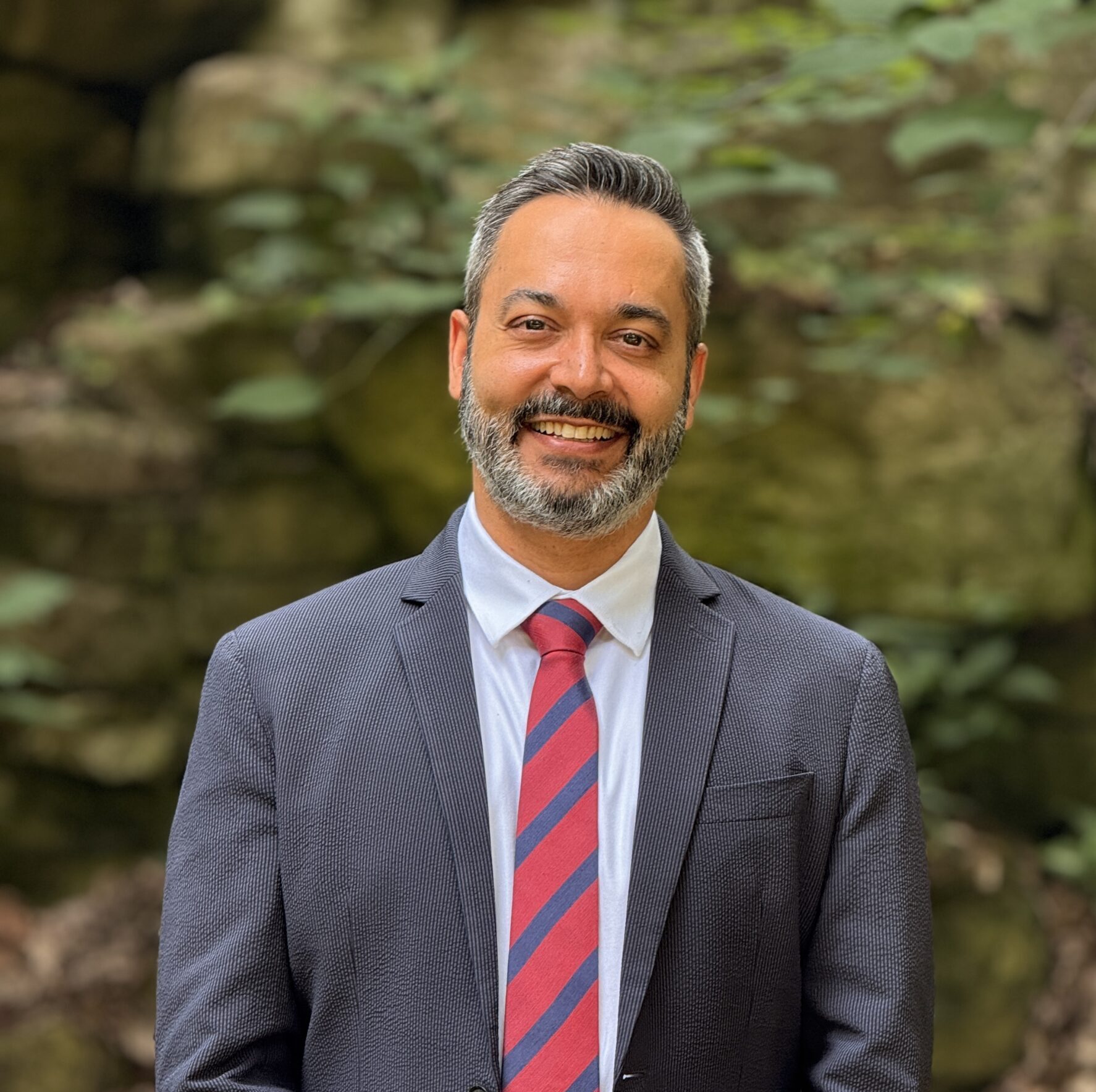
Dr. Rajiv Jhangiani
Dr. Rajiv Jhangiani is the Vice Provost, Teaching and Learning at Brock University in Ontario, Canada, where he is a Full Professor of Educational Studies with a cross-appointment in Psychology, directs the Inclusive Education Research Lab, and is affiliated with the Social Justice Research Institute and the Social Justice and Equity Studies program. A global leader in open education and an award-winning educator, his scholarship focuses on open educational practices, student-centered pedagogies, and ethical approaches to educational technology. Dr. Jhangiani has advised the British Columbia Ministry of Post-Secondary Education and Future Skills on its Digital Learning Strategy, Micro-credential Framework, and Ethical Educational Technology Toolkit. He formerly served as an Ambassador for the Global Advocacy of OER with the International Council for Open and Distance Education and on the Board of Open Education Global. He currently serves as Board Vice Chair for the Canadian Digital Learning Research Association.

Lab Manager and PhD Candidate
Oya Pakkal
Oya is a PhD candidate in Brock University’s Psychology Department and a doctoral student member of the Inclusive Education Research Lab. She received her Honours BA in Cognitive Science of Language and Honours BSc in Psychology, Neuroscience & Behavior at McMaster University, and her MA in Psychology at Brock University. Her SSHRC funded doctoral research (CGS-D) focuses on inclusive education, youth development, and experiences of invisibly or visibly marginalized learners. As a 2023–2024 Open Education Research Fellow, Oya also contributes to projects involving Open Educational Resources (OER), with particular focus on how design choices influence student perceptions of belonging, access, and equity in educational settings. She has co-authored peer-reviewed articles on topics such as the impact of zero textbook cost initiatives, and student perceptions of social justice framing in course syllabi. Oya also contributed to a sector-wide report released by eCampusOntario, On a Path to Open, which highlights the role of OERs in improving affordability and access across Ontario’s postsecondary institutions.

PhD Candidate
Anita Twele
Anita is a third year PhD student in the Psychology Department at Brock where she works in the Face Perception Lab. She completed her undergraduate degree in Psychology at Trinity Western University and her Masters in Developmental Psychology at Brock. Her main research focus is on first impressions of older adults (i.e., what perceptions do people form of older adults’ personality traits). She has also developed an interest in Open Educational Practices which has led her to the Inclusive Education Research Lab in which she is completing a Research Apprenticeship by helping with a project on designing course materials from a social justice perspective.

M.A. Student
Allison Rolle
Allison Rolle (they/she) is a graduate student, activist, and creative. Currently in the Social Justice and Equity Studies Program, Allison is also a Public Art Researcher and Project Coordinator with Oddside Arts in Toronto, ON. Allison engages with Black and Queer theoretical frameworks to challenge structures of power rooted in white supremacy and explore how we may bring about decolonial futurities. To this end, Allison’s research endeavours have focused on a range of issues including, but not limited to, the experiences of equity-denied groups in post-secondary, daily experiences of Black gender non-conforming communities, and food sovereignty as resistance to rising waves of anti-Blackness. Recently the recipient of the 2023-2024 Susan Sydor Award in Social Justice and Equity Studies, Allison continues to conduct research that emphasizes collective liberation. With the Inclusive Education Lab, Allison and Ph.D. student Oya Pakkal are conducting research – informed by Black feminist thought – on how intersectional identities are impacted by systematic oppression that remains rooted in post-secondary structure.

Rakha Zabin
Rakha Zabin is a fourth-year Ph.D. candidate in the Joint Ph.D. Program in Educational Studies at Brock University, specializing in Educational Leadership and Policy Studies. Her doctoral dissertation focuses on the Internationalization of Higher Education, examining the alignment between internationalization policies and the experiences of international students. Currently, Rakha serves as a part-time instructor and research assistant within Brock’s Faculty of Education, as well as a Board Member for the Brock Graduate Students’ Association. She has previously held leadership roles as President and Vice-President External Affairs of the association. Rakha’s background includes experience as a teaching assistant, writing mentor, and advanced educational tutor, all within Brock’s Faculty of Education. She is also a contributor to several international journals as an academic reviewer and writer. Her research interests center around educational research, with a particular focus on higher education.

Ben Johnson
Ben Johnson is a PhD student at Brock University in Applied Health Sciences and a member of the Lifespan Development Research Institute. He received a BA in Psychology and an MA in Child and Youth Studies from Brock University. He has a variety of research interests: innovative learning, reflection, higher-order thinking, mental health, invisible disabilities, and literacy. He is also passionate about the ways in which research informs policy and practice, particularly in the educational context. Ben has volunteered for the President’s Advisory Committee on Human Rights, Equity, and Decolonization (PACHRED) as well as the Anti-Ableism and Mental Health Working Group for the past few years. Ben has advocated for students as a member of the Brock University Students Union Board of Directors and as a Student Representative on Brock Senate for multiple years as well. Through these experiences he has taken interest in the role of OERs, and other evolving factors in education. Overall, Ben is passionate about fostering inclusive and uplifting educational experiences.

BEng, MEng, PhD
Wenting Rong
Wenting holds BEng, MEng, and PhD degrees in Engineering and a Master’s degree in Education from Brock University. With over a decade of experience in higher education as a researcher and instructor, her research interests focus on educational technologies, teacher education, STEM education, and innovation in pedagogy. Wenting has contributed extensively to academic literature, authoring over ten peer-reviewed journal articles, five books, and book chapters focusing on higher education and teacher education.
Wenting recently completed a project exploring an innovative student-centred pedagogical model for educational change or reform in mainstream schooling. Additionally, she is conducting a systematic review of teacher professional development initiatives to enhance digital literacy in Canadian classrooms, with a publication forthcoming. At the Inclusive Education Research Lab, she will contribute to projects related to ethical educational technologies and the survey of undergraduate students related to their experiences with course materials.

Pronoun (They)
Xiaoyang Xia – Nick
Nick is a PhD candidate in Psychology approaching defense. Passionate about leveraging theoretical frameworks, data science, and mixed-method research to advance social good.

4th year Psychology Honors Student
Shadaé Brown
Shadaé Brown is a passionate fourth year student in the Psychology Honours program and is pursuing a minor in the Women and Gender Studies program, her commitment to fostering equitable educational environments drives her work within the Inclusive Education Lab.
Shadaé’s research interests encompass mental health, social justice and dismantling the oppressive systems that exacerbate and further subordinate equity repressed individuals.
With experience as a Mental Health Team Lead, Counselling Intern and board member on the President’s Advisory Committee on Human Rights, Equity, and Decolonization (PACHRED) committee, Shadaé has developed a strong understanding of the challenges faced by marginalized populations. Consequently Shadaé is committed to deconstructing barriers to learning and fostering inclusive academic communities.
Through Shadaé’s advocacy for equity she strives to create systemic change within the world. Within her research contributions she is eager to unify intersectionality and principles of social justice to ensure that all voices are heard and all people are valued within educational settings.

Assistant Dean of the Library, Community College of Rhode Island
Collaborator
Lindsey Gwozdz

CEO of eCampusOntario
Collaborator
Dr. Robert Luke
Robert Luke, PhD, is Chief Executive Officer of eCampusOntario, which provides leadership to Ontario’s Indigenous Institutes, universities and colleges promoting digital by design education, collaboration and innovation. eCampusOntario helps to inform and shape Ontario’s postsecondary education system in consultation with sector stakeholders. Prior to his role at eCampusOntario, Dr Luke spent 10 years in executive management as Vice-President, Research & Innovation at George Brown College and at OCAD University. His expertise is in human-centered knowledge media design, working at the intersections of education and information science to produce useful and useable technology to support education, health and innovation systems.

Open Education Librarian (interim) and Doctoral student, University of Ottawa
Collaborator
Catherine Lachaîne

Associate Professor, Brock University
Collaborator
Dr. Karen Louise Smith
Dr. Karen Louise Smith is an Associate Professor in the Department of Communication, Popular Culture and Film at Brock University. At Brock, she is also affiliated with the Social Justice Research Institute and the Social Justice and Equity Studies MA program. Dr. Smith’s research focuses on bringing community, and public interest perspectives to bear on the design, use, and governance of digital technologies. Her published work includes a recent submission to federal policy-makers to comment on a privacy and AI draft bill, the exploration of pandemic connectivity for K-12 learners, a study of advocacy in privacy software design, and the creation of open educational resources to enhance digital policy literacy. Through her work, Dr. Smith strives to better understand the tensions between openness, privacy, and participation in technologically mediated culture.

Interim Executive Director, Open Education, BCcampus
Collaborator
Clint Lalonde
Clint Lalonde is an educational technologist and advocate for the use of open educational resources and open education practices in higher education. He has worked in various positions within the British Columbia post-secondary system for 25 years and is currently the Director of Open Education for BCcampus, a government-funded non-profit organization that provides teaching, learning, educational technology, and open education support for the British Columbia post-secondary sector. A founding member of the BC Open EdTech Collaborative, Clint has served on numerous advisory boards for open education projects and is a past board member of the Apereo Foundation.

Academic Librarian, Brock University
Collaborator
Laurie Morrison
Laurie is an academic librarian at Brock University where she currently holds the position of Collections Librarian. The core values of librarianship align with Laurie’s social justice-oriented values and beliefs, among which is the necessity for the provision of unfettered access to information as a foundation of a just and democratic society. She is an advocate for open access and open educational resource publishing which aims to provide free and immediate online access to academic books, research and scholarship. Laurie’s research interest blends the idea of “libraries as space” with the notion of contemplative practices, activities intended to develop deep concentration and a quietening of the mind. Specifically, she is interested in how libraries can draw from these two distinct areas of knowledge to create intentional spaces that facilitate and encourage a community of learners to enter deep, focused concentration.

Emerging Technology and Open Education Librarian, British Columbia Institute of Technology
Ian Linkletter

Senior Educational Developer, Accessibility & Inclusion, at the Centre for Pedagogical Innovation, Brock University
Collaborator
Dr. Ann Gagné
Dr. Ann Gagné (she/her) joined Brock in 2023 as the Senior Educational Developer, Accessibility & Inclusion, at the Centre for Pedagogical Innovation at Brock University. Previously she was at the University of Toronto Mississauga. Dr. Gagné’s work and research focuses on accessible pedagogical strategies and how to make teaching and learning spaces more inclusive of disabled lived experiences. This is part of a larger commitment to exploring ethicality and the senses, and how those senses are described, work that informed her doctoral research and monograph Embodying the Tactile in Victorian Literature: Touching Bodies/Bodies Touching. She has been published in the International Journal of Academic Development, The Handbook of Academic Integrity, and also hosts her own podcast on accessible pedagogy called Accessagogy. Dr. Gagné advocates for a more accessible and ethical higher education in her work, research, and her own teaching practices, through contextual, holistic, and intersectional awareness of inclusion, framed in constructivist, feminist, and queer theory.